

How Our Digital Agency Uses AI as a Tool To Support Our (Still Human Operated!) Processes
We’ve heard the panic before: “AI is coming for your job!” We won’t lie and say we didn’t do a little doom-scrolling late at night (after a glass of wine or three) and wonder… is AI actually coming for our jobs? Can a robot make a Reel better than I can?!
We quickly realized is, no, it’s not. At least, not right now *laughs with a tear rolling down our face*.
AI is an incredible tool, but fundamentally, it still doesn’t have the ability to be creative without prior references or apply human reason to unique scenarios. Since what we do at our agency is rooted in creativity, storytelling, and customizing our work to specific client needs, AI doesn’t, actually, always have all the answers.
Sure, AI can certainly write a caption. In fact, we tested that out capability here. And now, as AI continues to grow, we’ve seen more agencies, creators and brands utilize AI to write captions or create content and, honestly, it shows. Social posts are getting increasingly similar, less personal and slightly… robotic? Like, let’s be honest with ourselves here – no one uses the word “delve” that much. (Although some of us do feel personally offended by AI’s overreliance on the em dash, and we refuse to stop using it just because AI does too.)
Although we, as an agency, don’t believe in using AI to create our clients’ content (because that’s literally what they pay us for), we do think AI is a valuable tool to streamline and enhance everyday processes. To keep our team accountable on how we use AI in the workplace, our Senior Leadership team implemented an AI policy and guide for them to reference so they know the expectations about how we can (and cannot) use these tools. To stay true to the spirit of transparency that we’ve always embodied, now you’ll know them too!
How exactly is our hospitality marketing agency utilizing AI? Let’s delve (😉) into it:
REPORTING
Our team utilizes a trusted third-party integrated tool for reporting, with manual evaluation of the in-app numbers to ensure consistency and accuracy. Our report analyses are still written by actual humans, doing actual evaluations of the data. That said, there are circumstances that can directly affect reporting for which AI helps provide additional context. For example, when we see a sharp drop in followers or engagement that our reporting tool can’t explain, we’ll research that no new inactive account purges happened overnight or that Meta rewrote the algorithm again (despite popular belief, social media agencies DO NOT have a direct pipeline to Zuck), but if we don’t find the answers in our research, AI can help us find hidden changes or reported trends that are buried on message boards, forums, and closed groups from other social media professionals, allowing us to better understand and explain the data.
Since AI is literally made from a series of math equations, it’s also, frankly, much better and faster than any human (no offense, mathletes) at finding those reporting irregularities to begin with. Our third-party tool has AI built in for exactly this reason – it will scan all the data it pulls for our clients, look at their historic numbers, and call out any anomalies in the data for our team to review manually, ensuring we can not only explain what we’re seeing, but why.

NICHE INFLUENCER IDENTIFICATION & INFLUENCER REPUTATION ANALYSIS
So, your influencer platform found the perfect partner… but did it? In our extensive experience with influencer platforms, we have found that much of the information contained within them can be completely inaccurate, from follower counts to engagement rates to influencer location. Though we do have an influencer tool, our team still conducts much of our influencer research manually (yes, we actually GET ON THE APP AND SEARCH, because it’s still the best way!), but we also utilize AI to help us find micro-creators in niche markets. (Ex: “Find me 7-10 TikTok home cooking recipe creators in Minneapolis with under 50k followers.”) From there, we’ll manually review the profiles AI suggests, ensuring their content is aligned, follower count is within our parameters, engagement is strong, and they have evidence of successful like-minded partnerships.
We’ll also use AI to cross-check any potential news or controversy regarding creators suggested by our influencer platform, creators added to an internal list that we haven’t worked with before, or creators who have approached our client for a partnership. We certainly don’t want to make a recommendation to a client and find some… unseemly behavior from the creator on the internet. AI is great at helping us do this quickly, and to ensure we’ve seen it all, we’ll also use good old-fashioned search (shoutout to Google; you’re still helpful without Gemini!) to triple-check we haven’t missed anything. This is actually a great example of why clients and creators alike need to be mindful of verbiage and SEO within their social media posts, bios and alt-data: they are being used for searchability. (Stay tuned for another post on this; coming soon!)
PROOFREADING
We like to think of ourselves as great writers, but even with the help of Grammarly, we make mistakes. Running a caption, document or email through ChatGPT and having it focus specifically on grammatical errors (not preferences or style, because as you can see, we like to keep it personal) helps keep our work high-quality and ensures we’re adding a third layer of protection against any potential typos or errors before we push content live.
SOCIAL MEDIA TREND-SPOTTING
Everyone wants to be trendy, but does it work? AI has been able to help us find origins of specific trends, source sounds that are aligned with the trend, and monitor the virality and longevity of it. Using AI, we’ve been able to backtrace some trends across Instagram and TikTok and provide thoughtful recommendations to our clients on why they should or shouldn’t participate in them.
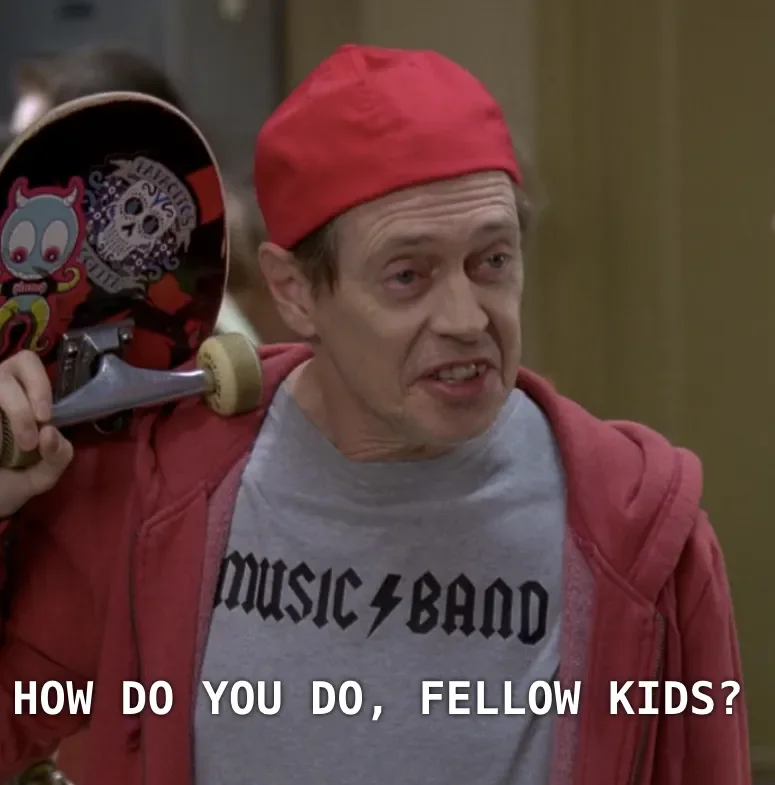
Don’t be this guy. Know your trends.
RESEARCH FOR SOCIAL MEDIA ADVERTISING
AI really does have access to the whooooole internet, and when given the correct prompt, it can help us create or refine a target audiences that are tailored to both the client and the spending habits of the world. Who is more likely to stay at your all-inclusive hotel? Let’s look at the data, because it may have changed. AI allows us to see all new audiences and help our clients reach them.
We also like to test multiple CTA’s within some of our ad campaigns to see which style performs best for a client, and occasionally, we’ll use AI to suggest additional options that may work better for the target audiences we’re using. AI’s capability to quickly analyze specific parameters (like a robust interest targeting list) and suggest potential spinoffs of our current CTAs that contain key terms we know we want to use for search/visibility, is, again, much faster than a human brain doing all of that at once.
CREATIVE EDITING/PRODUCTION
We’ve also begun testing AI’s creative production capabilities with some clients, as we’ve had a few that have requested we do this instead of utilizing a video or photo editor for specific changes. This usually happens when small adjustments are needed, like removing power lines in the background of a shot or adjusting the lighting on a video so it looks more like a specific time of day. We’ve found that these smaller or more general edits are tasks AI can handle well if it’s given very specific prompts, but it does still struggle with larger or more complex edits. (Please feel free to ask our team about the time we asked AI to add a dog on a leash to a video of a woman walking across a green space. We saw a lot of… “creative” – and slightly disturbing – new dog breeds from that prompt.)
Canva is a graphics tool we use frequently, and its in-app AI can also be really helpful for additions to an asset that really help it stand out, like suggesting royalty-free music that aligns with the tone and pacing of a video, beat syncing videos to music within a Reel, or creating a custom template for a Story graphic that we can modify with our clients’ brand colors and fonts.

Us, in Canva AI
INTERNAL WORKFLOWS AND PROCESSES
We’ll spare you the details on this (we know no one really cares that much about the internal workings of an agency; sorry to our CEO!), but one of the areas where AI has been the most helpful for Firecracker has actually been with internal operations and processes. Utilizing AI is helping us become more strategic about the way we staff, train and manage our teams and operational structures, from helping us generate scripts for training videos to creating advanced team capacity tracking databases, allowing us to make smarter, more efficient decisions so we can dedicate our time to what matters most – our client work.
THE BOTTOM LINE
We’ll leave you with the first line of our internal AI policy: our endorsement of AI usage is intended to enhance, not replace, our team’s expertise, creativity, and strategic thinking.
Firecracker is dedicated to bringing our clients high-quality social media and digital marketing services, and we’d be remiss if we didn’t utilize one of the modern world’s most powerful digital tools. Our AI usage allow us to work smarter, not harder, and better the quality of our workflow and client deliverables, not replace our team, authentic approach or creativity.
(And, as you can probably guess, no AI was used in the writing of this blog post.)
If you’re interested in learning more about our hospitality digital marketing agency and our capabilities, drop us a line at info@firecrackermktg.com.